Septic Tank Installation in Columbia & Maury County
From bare dirt to a permitted, inspected system. Here's how it works on this ground.
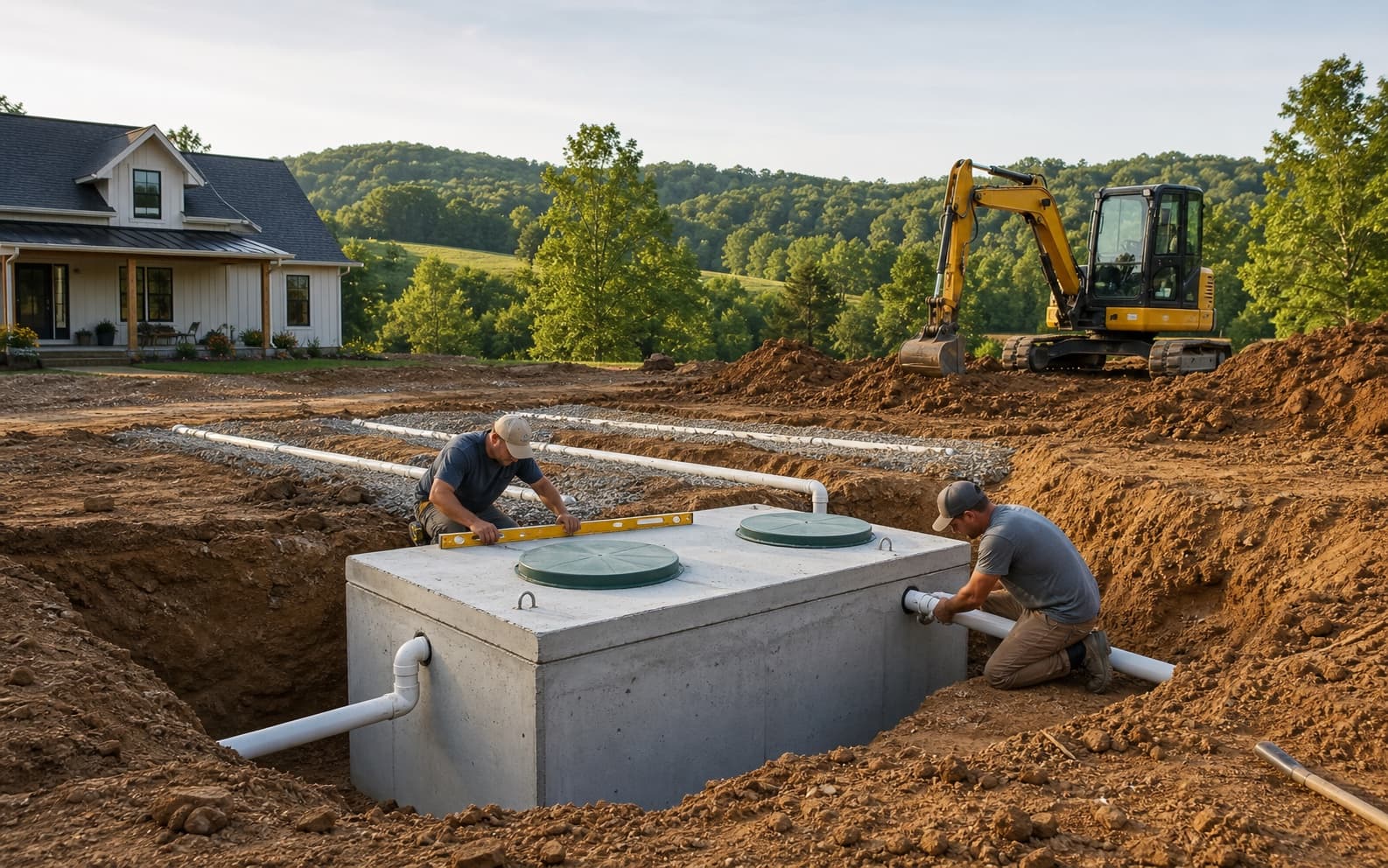
What does septic tank installation involve in Maury County?
Four steps: a soil map from a TDEC-approved consultant, a permit from TDEC's Columbia field office, construction by a state-permitted installer, and the required inspection before anything is covered. Budget $8,000 to $15,000 for a conventional gravity system and up to $30,000 or more for an engineered one. Your soil map decides which.
Soil and site evaluation
TDEC SSDS permit · Columbia Environmental Field Office
$8,000 to $30,000+, not a state-set price
Generally 10 days; complete review required within 45 days
When do you need a new septic system?
A new house, manufactured home, barndominium, or accessory building with plumbing needs an approved wastewater arrangement. That may be public sewer, a separate septic system, or an approved connection to an existing system with enough capacity. Ask TDEC about the combined use before connecting an extra bathroom or dwelling. Get septic approval before disturbing the proposed field. In unincorporated Maury, the county requires septic documentation for a building permit. Your application sketch shows the house, driveway, well, springs, and property lines, plus the bedroom count. Start with the Maury County soil and site evaluation guide, then see the state application requirements.
Conventional or engineered: which will your land need?
TDEC describes alternative systems as the route when soil or site conditions do not favor a conventional design. In Maury County that turns on soil depth over limestone: where rock sits shallow, trenching costs more and the usable disposal area shrinks, which is how a lot ends up with an LPP or mound design instead of a gravity field. The numbers below are for early budgeting. Nobody can price your lot until the soil map is done:
- System type
- Conventional gravity
- Installed range
- $8,000 to $15,000
- When it’s the answer
- Planning range where suitable soil and a gravity layout are approved
- System type
- Low-pressure pipe (LPP)
- Installed range
- $12,000 to $22,000
- When it’s the answer
- Planning range for a pumped design that uses shallower suitable soil
- System type
- Mound or drip
- Installed range
- $15,000 to $30,000+
- When it’s the answer
- Planning range for engineered dispersal and added design work
- System type
- Advanced treatment (ATS)
- Installed range
- $15,000 to $30,000+
- When it’s the answer
- Planning range plus perpetual maintenance required by the state rule
| System type | Installed range | When it’s the answer |
|---|---|---|
| Conventional gravity | $8,000 to $15,000 | Planning range where suitable soil and a gravity layout are approved |
| Low-pressure pipe (LPP) | $12,000 to $22,000 | Planning range for a pumped design that uses shallower suitable soil |
| Mound or drip | $15,000 to $30,000+ | Planning range for engineered dispersal and added design work |
| Advanced treatment (ATS) | $15,000 to $30,000+ | Planning range plus perpetual maintenance required by the state rule |
See the full Maury County septic cost guide for scope and bid comparisons. Comparing systems in detail? See aerobic vs conventional systems.
Building around Spring Hill? Two things change. The city's sewer moratorium means you can't assume a sewer tap, so read the Spring Hill sewer moratorium guide first. And the lots that do go septic often land on a pumped design, so it's worth knowing how a low-pressure pipe (LPP) system works before you get bids.
What size septic tank will your house need?
Bedrooms set the minimum, not bathrooms or square footage. These are Tennessee's minimum liquid capacities under Rule 0400-48-01. Plan for the bedrooms you might add later, because adding one after the fact can mean a modification permit and a bigger tank.
| Bedrooms | Minimum tank size |
|---|---|
| 2 or fewer | 750 gallons |
| 3 | 900 gallons |
| 4 | 1,000 gallons |
| 5 | 1,250 gallons |
| Each bedroom beyond 4 | Add 250 gallons |
The disposal field is sized separately from the soil map. More detail in our Tennessee septic tank size guide.
How does the install process work?
Tell us about it
The job, where the property is, and how to reach you.
We read it
We may email you a question, then look for a licensed installer who covers your area.
An installer may call
If one can take the job, they contact you directly. That isn't guaranteed.
You decide
Get the price in writing, compare bids, or walk away. You owe nothing.
TDEC recommends applying online. A complete review generally takes 10 days and must finish within 45 days. Those are review periods, not a guaranteed construction schedule. TDEC also has a third-party package and inspection route. Confirm who will inspect and what approval is needed before the system is covered or used. Read the exact TDEC permit steps and fees, then use our Maury County permit guide.
Before your estimate, gather:
- Property address or parcel number
- Number of bedrooms (planned, including future ones)
- Whether a soil evaluation already exists
- Any TDEC permit or record already issued for the parcel
- Water source (public or private well)
- Access notes: gates, long drives, steep or wooded ground
About our sources. Maury Septic uses the sources listed below, including the Tennessee Geological Survey atlas for Maury County. Follow the links for the underlying rules, fees, and guidance.
Sources and further reading
- TDEC third-party permits and final inspections
Tennessee Department of Environment and Conservation
Route available since October 1, 2024: registered third-party water resources engineers, eligible soil-scientist packages, submission instructions, and agency review. TDEC still issues the permit and certificate of completion.
- TDEC SSDS construction permit
Tennessee Department of Environment and Conservation
Who needs a permit, application requirements, review timing, current state fees, and inspection duties.
- TDEC septic services and online application
Tennessee Department of Environment and Conservation
Conventional, repair, and alternative-system applications, plus soil-map requirements.
- TDEC approved soil consultants
Tennessee Department of Environment and Conservation
What an approved consultant evaluates, current qualification rules, and the state consultant list.
- TDEC licensed installers and pumpers
Tennessee Department of Environment and Conservation
State licensing requirements and the current installer and pumper lookup.
- Environmental Geology Atlas of Maury County
Tennessee Geological Survey
State-published geologic, unstable-materials, flood-prone-area, mineral-resource, and sinkhole maps for Maury County.
Ready for a septic estimate in Maury County?
What do homeowners ask about septic installation?
How long does septic installation take in Maury County?
TDEC's part is fast: a complete application generally gets reviewed in 10 days, and the state has to finish within 45. The slow parts are on either side of it. Booking a soil consultant, any engineering for an alternative design, and the installer's schedule usually take longer than the review. Wet weather stalls digging too.
How much does a new septic system cost here?
There is no state-set installation price. A conventional system may fall in an $8,000 to $15,000 planning range, while engineered systems can reach $15,000 to $30,000 or more. Treat those as budgeting figures only. Soil, design, access, and competing written bids determine the actual price.
Who can install a septic system in Maury County?
A hired installer needs a current TDEC permit covering the proposed system category. Rule .19 also has a limited exception for an owner or tenant doing their own work at their residence; the construction permit and inspection still apply. Confirm that exception with TDEC before relying on it. For hired work, verify the installer and insurance before signing.
Can a septic system be installed in winter?
Often, yes. Cold is rarely the problem; saturated ground is. Crews cannot cut clean trenches in mud, and TDEC still has to inspect before anything is covered. A permit does not guarantee a construction date in any season, so ask the installer how they handle rain delays and open excavation.
Ready to request an installation estimate?
Related: septic replacement · septic repair · aerobic service · permit guide · cost guide
Keep your permit, system sketch, and service records together. They help the next professional understand your property.