Aerobic Septic Service in Maury County
These systems are little treatment plants. They need a mechanic, not a shovel.
Do aerobic septic systems need regular service in Tennessee?
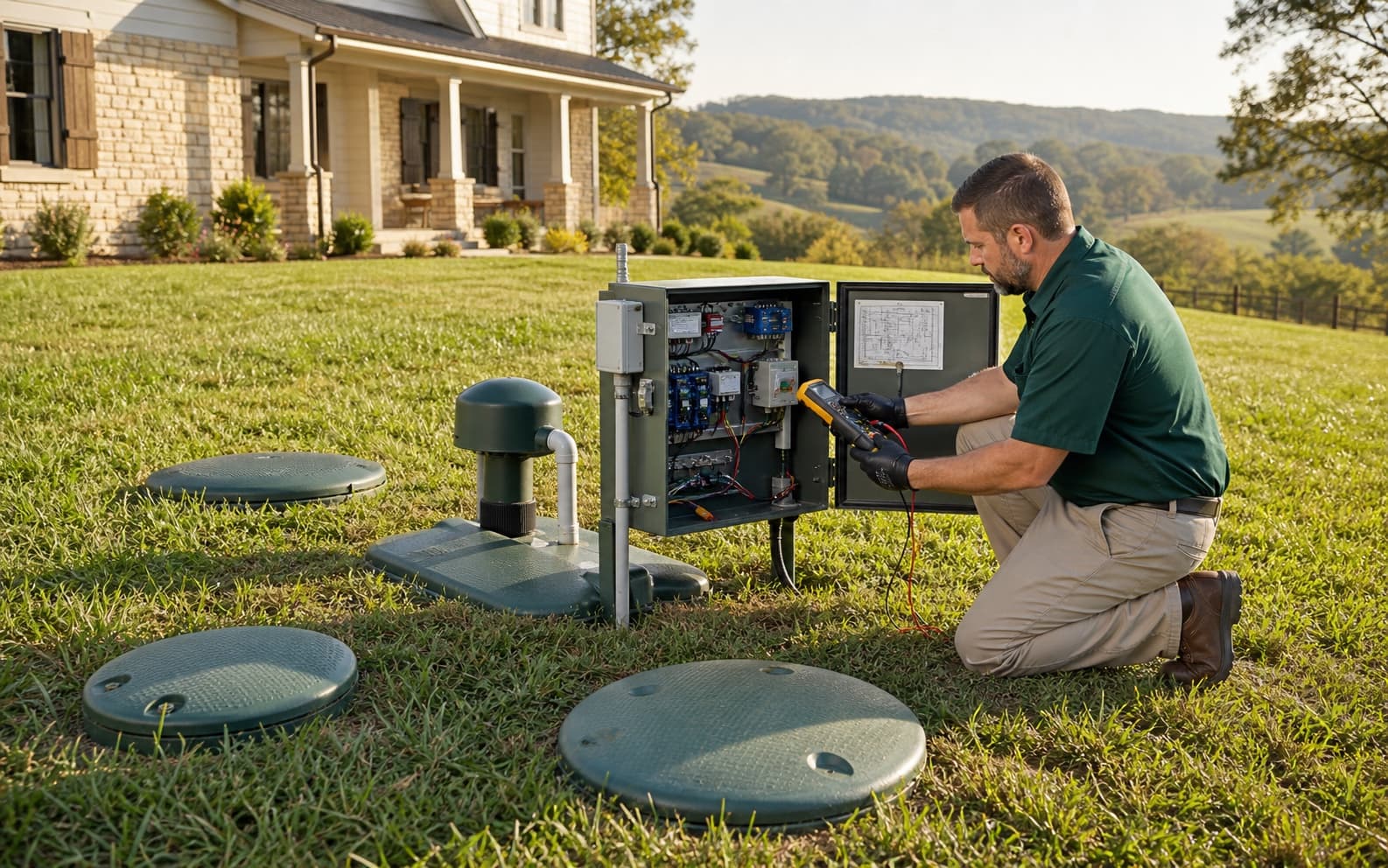
Yes, for as long as the system exists. Tennessee requires every aerobic (advanced treatment) system owner to keep a maintenance contract with a provider certified for that unit, with routine visits every three months unless TDEC sets another schedule. Many owners plan around $500 a year. If the contract lapses, the provider has to tell TDEC within 30 days.
Routine visits every 3 months unless TDEC adjusts them
Required for the life of the system and future owners
TDEC-approved provider certified for the unit model
Cancellation and non-routine failures go to TDEC
What should Maury County ATU owners verify?
Maury County has no county septic office. TDEC's Columbia field office holds the records. Start with the state SSDS records search and find your permit. It names the treatment unit, and the unit's brand and model are what decide which providers can legally service it.
A Spring Hill mailing address needs one extra check because the city crosses the county line. Maury-side systems use TDEC's regional path; Williamson County operates a contract county program. Confirm the parcel's county before sending records or service questions to the wrong office. The Spring Hill septic guide explains the split.
What does an aerobic service visit cover?
A compliant visit follows the approved unit and manufacturer checklist. In practice that means the parts that actually fail: the aerator and its air supply, filters, floats and alarms, disinfection where the permit requires it, and sludge checks with pumping when needed. Tennessee's rule sets the floor for what the initial manufacturer contract covers, including repairs on the disposal side and service calls you request. See Rules 0400-48-01-.10 and -.23.
TDEC groups these systems under “advanced treatment systems” (ATS); homeowners and manufacturers may use “aerobic treatment unit” (ATU). Use the exact model and permit language when hiring service. A provider approved for one manufacturer is not automatically certified for every unit.
What happens if the service contract lapses?
The rule is direct: the owner must maintain a contract for the life of the system. Failure can be treated as a Class C misdemeanor and can trigger civil penalties for each violation or day it continues. The provider must notify TDEC within 30 days if the owner cancels or does not renew.
If the paperwork is missing, pull the SSDS record, photograph the control-panel and unit labels, and contact an approved provider certified for that model. Ask TDEC how to cure any contract gap; do not assume signing a new agreement erases an earlier compliance issue.
About our sources. Maury Septic uses the sources listed below, including Tennessee Rules 0400-48-01-.10 and 0400-48-01-.23. Follow the links for the underlying rules, fees, and guidance.
Sources and further reading
- Tennessee SSDS regulations, Chapter 0400-48-01
Tennessee Department of Environment and Conservation
Official rule index for permits, design, maintenance, soil consultants, installers, and fees.
- TDEC septic services and online application
Tennessee Department of Environment and Conservation
Conventional, repair, and alternative-system applications, plus soil-map requirements.
- TDEC SSDS records search
Tennessee Department of Environment and Conservation
Official state viewer for locating septic-system permits, site sketches, and related records.
- TDEC SSDS contacts by region
Tennessee Department of Environment and Conservation
Environmental field-office routing for septic-system questions and applications.
Ready for a septic estimate in Maury County?
What do owners ask about aerobic septic service?
Does Tennessee require a maintenance contract for aerobic septic systems?
Yes. The owner has to keep an operation and maintenance contract with an approved provider for the life of an advanced treatment system, and the duty passes to each new owner. Buying a house with one? Make the contract transfer part of closing. Your permit and the unit manual list any model-specific tasks.
How much does aerobic septic service cost?
Tennessee does not set the private contract price, so treat this as an editorial scenario: many owners plan around $500 a year for the service contract plus roughly $150 in electricity, before parts. A low headline price means little if aerators, disinfection supplies, and callouts are billed separately, so compare what each written proposal excludes.
How often should an aerobic system be serviced?
Every three months to start. That's the Tennessee rule's baseline, and TDEC can change it based on how complex the system is, how it performs, and what the manufacturer recommends. Plenty of national guides quote once or twice a year. Go by your Tennessee permit and contract instead.
Can I service my own aerobic system?
No, not for the required operation and maintenance visits. Tennessee requires an approved provider with manufacturer certification for your unit model. You can still watch the control panel and keep supplies stocked where the permit and unit manual assign you those tasks, but the required visits belong to the certified provider.
Do you need aerobic septic service?
Related: aerobic system cost · how an ATU works · alarm troubleshooting · maintenance guide · new installation · septic replacement · septic repair · ownership cost guide
Keep your permit, system sketch, and service records together. They help the next professional understand your property.